
After Hundreds of Brand Shoots, I Finally Understood What It Feels Like to Be the Client!

I know I’m always repeating this but it’s true: your imagery does need to grow with you. That photo that worked three years ago just doesn’t reflect who you are now, not because it’s wrong, but because you've moved on.

Whether you have new offers, new processes, or a new perspective on your business, things have changed. The one thing I keep telling business owners is that regular refreshes aren't about vanity; they're about making sure the way you're seen by the world keeps up with the way your business has grown. Take a look at my recent blog here, where we discuss this in more depth
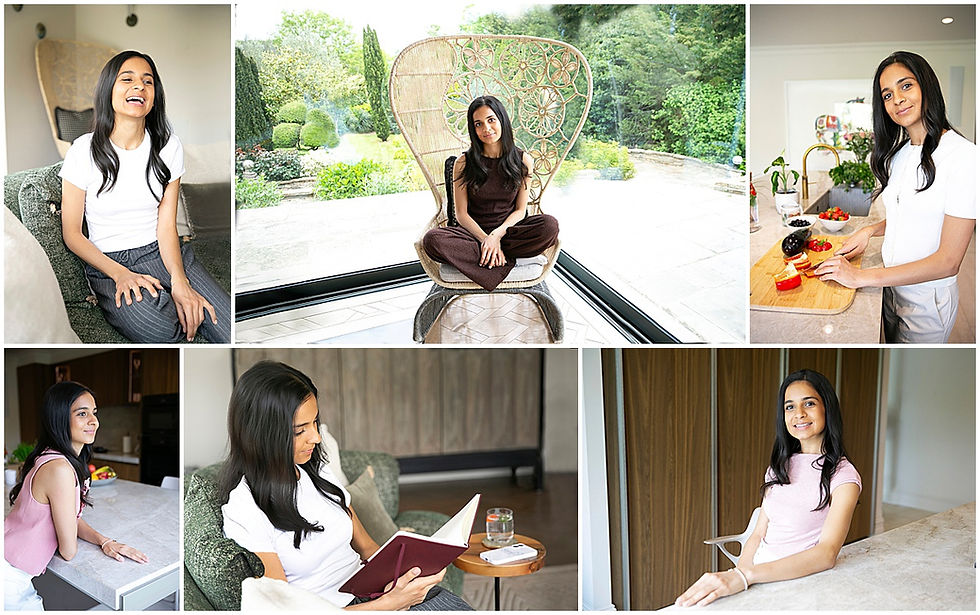
Why am I talking about this again? Well actually, my perspective has shifted slightly. In the past year or so, I’ve been thinking about my own business and just how I’ve been presenting myself, here's something I don't often admit: I spend a lot of time encouraging you to stay visible, to keep your images fresh and intentional — but I don't always follow my own advice. My photos get the occasional refresh, sure, but nowhere near the care I'd put into planning a client's shoot. So recently I finally sat down and gave myself the same attention I give my clients. In this blog, I want to take you through that whole experience — what it felt like, what I learned, and why it mattered more than I expected.
Just like yours, my business is evolving, and I wanted my own visuals to step up.
One thing the experience confirmed for me (and it’s something I’ve been saying a lot in the
last few years) is that photography is only half the job. The strategy behind it - how and
where you use your photography - is just as important.
I've taken a lot of people through this process over the years. I understand the practicalities
and the nerves. In theory, I knew exactly what to expect, and while I was right about most of
it, I’ve learnt some things that will change how I work with my clients forever.

BEFORE THE SHOOT:
Feeling the Feels
Taking the decision to be 'the client' was more daunting than I ever imagined. I'd prided myself on being the expert — what I didn't expect was how my own feelings would take hold. I knew the emotions my clients went through (several had told me themselves about the nerves), but I hadn't expected to be affected so deeply myself. After all, I'm a professional brand photographer — I knew what to expect and how to prepare. I was wrong.
I started to understand that these feelings can be both logical and illogical — and both can be true at the same time. I knew the process, I knew what I wanted, I knew the photographer I'd chosen would be perfect — but I still felt panicky. Of course I worried about money; it's only natural, and my clients worry about it too. But I also knew what I wanted meant investing properly — not just in a brilliant photographer, but a location that reflected my brand, a make-up artist who'd make sure I looked my best, and — on my wish list — a stylist to pull the whole look together.
Deciding to invest in a brand shoot is huge — not least because it's expensive. But I believe half-hearted, toe-in-the-water attempts only get you so far. Building your brand takes full commitment if you want real buy-in from your audience. It's not about faking it — it's about communicating the most honest version of yourself. Even knowing that, I still felt a bit sick adding up the cost, and in the end I dropped the stylist to save money. Looking back, I think that was a mistake — next time, I'll give it a bigger budget. Will I still feel a bit sick about spending more? Yes. Will I regret it? No — because photography carries a heavy load in your marketing, and it needs to work for you.
The financial element wasn't the only thing playing on my mind — I also worried whether all this time and money would actually translate into what I needed. I'll admit it: I'm a control freak. I'm used to sitting behind the camera, planning other people's shoots, knowing exactly what will and won't work for them. But when it came to my own shoot, I suddenly felt unsure how it would all turn out. I had a vision — I just wasn't certain anyone else could translate it accurately, and that thought played on my mind constantly.
How I'd look in the pictures worried me too. I know this is something my clients think about constantly — we all have hang-ups about how we look — and I was scared, even though I'd been in front of the camera before. Just never on this scale. Then there was the added worry about clothes — what to wear, how they would look and if they were on brand, whether it would even look like "me". It's the same worry I hear from clients time and time again, and I now understand exactly why. For some clients, this worry is enough to make them put off a shoot for months — or avoid one altogether. I get it now, in a way I never fully could before.
I felt genuinely overwhelmed by the sheer weight of emotion — for weeks before my shoot, it was all I could think about. I hadn't fully realised the impact a brand shoot can have on someone until I lived it myself. Because our businesses mean so much to us, this part of marketing feels deeply personal — and it's perhaps one of the hardest parts to get right.
Choosing… Your Photographer, Location, Stylist
Before a single photo was taken, there was a small mountain of decisions to make. As I've mentioned, investing in a brand shoot means deciding your budget up front — mine was £3K. I already knew who I wanted as my photographer; someone I knew well, trusted, and had a great relationship with, so that part of the budget was fixed from the start. The location and make-up artist, though, took a lot more thought.

For logistical reasons, I'd already decided on a local house location — but it needed to fit my brand and feel like me, not a generic backdrop. I found one, but even then I second-guessed myself: was it right? Would it give me and my photographer the flexibility for the shots I needed? Would it fit my budget?
I also chose to shoot in a cafe and in the local woods. Each gave me beautiful images, but looking back, three locations was one too many — it ate into time and added stress. I wish I'd stuck to two; it would have given the second location more focus and produced stronger images.
Finding a make-up artist was easier — I'd loved working with someone on a recent shoot and booked her straight away. What I hadn't factored in was a practice session beforehand, which ate into the budget. By the time all the costs added up, the stylist I'd wanted had to go. I've seen how hard these decisions are for my clients — and this time, I felt it myself.
Planning… Realistically
I’ve written before about planning for your photoshoot - you can check that out here. Here's the honest version rather than the tidy one: the decisions you make and the plan you create are where a shoot either comes together or starts to wobble, and I felt that first-hand.
As I have already mentioned I had a vision in my mind of what I wanted the images to look like and what they would incorporate, but just because you have a vision doesn’t mean it always fits with reality – time is not elastic as much as I would like it to be and as with my own photo shoots, there was a fixed time and only so much we could achieve in it.
I’d decided that I wanted three people to act as clients across the shots, two at the house and one in a café. As it happens, I only found two - Shilpa and Karen (thank you ladies!), and in hindsight, that was the right number after all, I would have had to sacrifice another set up to have an extra client in the pictures.
You might see a pattern here - with the number of locations,“clients” and a car loaded with props - I’d planned for every possible eventuality and could never actually use them all. With plans and lists already made, I was still picking out more props on the morning of the shoot, and outfits the night before.
Instead of finalising things early, my photographer Lucy and I went for dinner at the pub the night before the shoot. A fair few glasses of wine later, we came home, tried on outfits, and talked through props - later than either of us would recommend, what was I thinking of… and with less clarity than sober planning would have given us.
Poor Lucy. If I'd been in her shoes with a client like me, I'd have despaired — turns out photographers make the trickiest clients of all.

The practical takeaway: try to set aside time in the week before your shoot to pull these things together. Arrange a time to discuss these things with your photographer if that will help - but at a time when you aren’t tired and with wine inside you.
THE BIG DAY
Expectations
We were thirty minutes behind before we'd even left the house. Getting everything and everyone into the car took longer than planned; ambition is great, but being realistic brings more confidence.
Despite my unrealistic plans for the shoot I loved every minute of it. Being in front of the camera and centre of attention was fun. Working with Lucy (behind the camera) and Shilpa (in front of it) was a joy, and having my daughter there helping behind the scenes was wonderful. We had such a positive day, even with the clock working against us. I guess that’s one thing we can never fully convey when we tell people what their shoot will be like - it can be stressful and genuinely fun, sometimes in the same 10 minutes.
Then there were all the other things I hadn’t accounted for. Makeup touch-ups and outfit changes alone took oodles of time, and parking issues (grrr) cut into our café time. I’d seem to have forgotten all these things that can happen on client shoots could just as easily happen on mine.
By the end of the day, I was exhausted and felt a bit flat. not because the day had gone badly, but because the stress and the rushing had taken the shine off it and I had no idea what the results would be.
Practical takeaway: Its important to remember that the day is going to be tiring, you’ve got a lot to do and a lot of emotional attachment to the process and outcome. With nothing but the occasional sneak peek the photographer shares on the day, the highs and worries add up. Try not to let this cloud your memory.
AFTER THE SHOOT
Picture Perfect? Seeing the pictures for the first time, my first reaction wasn't quite relief — but I was also fully aware that the first look is rarely the full picture. We're wired to notice our own flaws before anything else — it's just what happens when we look at photos of ourselves, and I could see especially as a photographer some things I could have done differently - It was clear three locations had spread us too thin; I'd have loved more time in the cafe with Karen instead and why was I wearing headphones in so many shots in the woods - Silly things, really — the kind of small details I felt I should have had sorted, given what I do for a living.
But actually with so many fantastic images to choose from, there was genuinely plenty to work with. And once I stepped back — showed a few people, came back to the gallery with fresh eyes — my whole perspective shifted. I loved what I saw.
If you're a client of mine, I'll always hope for a gushing reply the moment I send your gallery through! But honestly, take your time. It's rare for any of us to look at a full set of photos of ourselves — it can feel like a lot. Give yourself space, ask someone you trust for their take, and let yourself enjoy it.

Strategy is Key
This is the element that brings everything together. Just like I’ve said so many times before, and written a whole blog about, having a plan for your images will help at every stage.
Having my images isn't the finish line. Now I can use them! These images weren't just for the sake of it — I'd planned them carefully, with a clear purpose: to power a marketing campaign that would take my business to the next level, and I spent quite a lot of time planning how where and when the images would be used.
It's the half I talk about constantly with clients — where these images will show up, what they need to say, how they support where your business is heading. And yet it's the part that's easiest to lose sight of once you're caught up in the day itself.
That's exactly why planning your images in advance matters so much. What's their purpose? How will you use them? Knowing this makes every image more valuable — and means that even if you're spending £3K, you know it'll bring a return.
What This Confirmed
I've walked clients through this journey so often before that I thought it would make my own
shoot feel easier. It didn't, not entirely. I was struck by the power of my hopes and
expectations, and my slightly overly controlling tendencies, all fighting for space.
One thing it did confirm, though - something I already believed and now have the evidence
to back up: the nerves, the second-guessing, the moment of feeling deflated before you can
see the images clearly - none of that means it’s gone wrong. It’s just part of the process.
I understand what my clients are going through on shoot day, because I've been where
they're sitting. And I understand what they're really trying to achieve because I had to work it
out for myself, too.
If you're thinking about how your business shows up - perhaps you’re feeling that you’ve left
your old images behind - I’d l bove to help.
Because I believe your photography strategy is so important to business marketing, I would like to help you delve a little deeper into how you are using your current imagery - are you getting the best out of it, is it working hard enough for you? Book a Brand Strategy Call with me for just £99 (worth £250) by clicking the link below, and let me help you reach more of your ideal clients.
Love to know a bit more about me? - why not follow me on:


Comments